
Recently, the presidential election in Djibouti has officially kicked off. After casting their votes, voters proudly show their fingers marked with election ink—a common yet touching sight at polling stations across the country. Though seemingly ordinary, this special ink is used in more than 100 countries worldwide to safeguard the integrity of elections. With just a single mark on the fingertip, the fairness and legitimacy of democratic elections are firmly upheld.
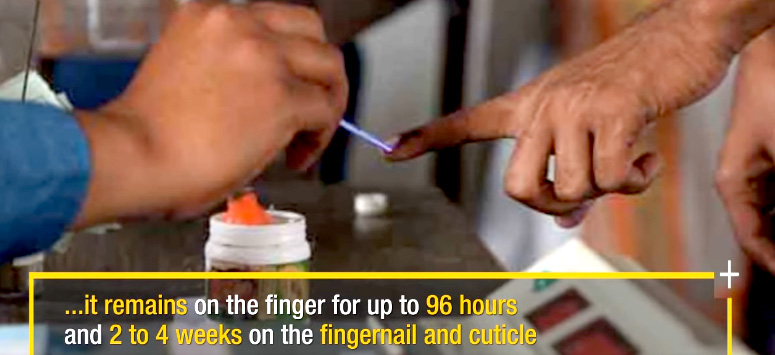
Election ink, also known as indelible ink, is primarily composed of silver nitrate.
Election ink, also known as indelible ink, mainly contains silver nitrate.
Once applied to the hand and exposed to ultraviolet light, it leaves a permanent mark on the skin and fingernails that cannot be washed off by ordinary cleaning methods. The mark only fades gradually as the skin naturally renews itself and the nails grow out, a process that usually takes several weeks or even months.
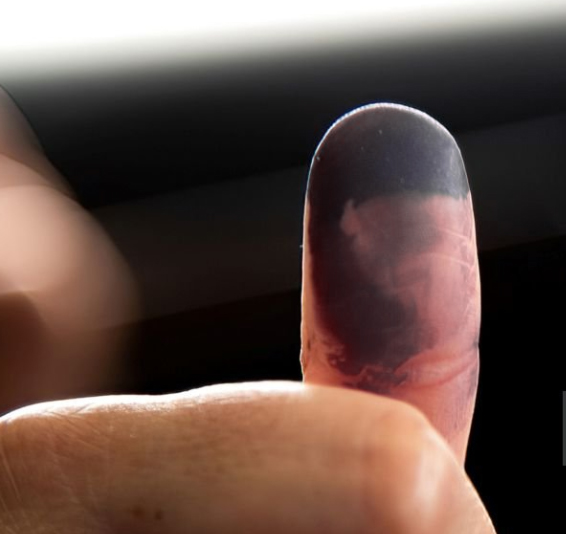
The mark can last for months and will not fade.
As early as 1962, this type of ink was first used in India’s general election. Developed by India’s National Physical Laboratory, it is now exported to more than 30 countries and has become an essential anti-fraud tool for elections.
At polling stations, election staff apply the ink evenly to voters’ left index or little fingers, covering both the nail and nail bed. This effectively prevents electoral fraud such as multiple voting and proxy voting.
The United Nations Development Programme provided 113,000 bottles of election ink for Myanmar’s 2020 general election. Following strict testing, the silver nitrate content of these inks fully met international standards. Even after repeated washing with soap and alcohol-based hand sanitiser, the marks remained clear and intact.

This ink was first used in the Indian general election in 1962.
With continuous advancements in technology, electoral ink has also been constantly upgraded. Today, products are available that not only display visible colours under normal light but also feature fluorescent anti-counterfeiting properties.
The mark is clearly visible under ordinary light, and when illuminated with an ultraviolet lamp, a special fluorescent pattern appears, delivering enhanced anti-fraud effects. The ink is non-toxic, harmless to the human body, and more environmentally friendly. This small bottle of ink is more than just a tool to prevent electoral fraud—it acts as a “medal” for voters exercising their democratic rights, embodying public aspirations for fairness and justice.
From Asia to Africa, whether in presidential elections or local polls, electoral ink safeguards the integrity of every vote thanks to its simplicity, efficiency and low cost. That tiny mark on the fingertip not only reflects the solemnity of democracy but also bears witness to the global pursuit of fair elections, making it a cross-border symbol of democracy.
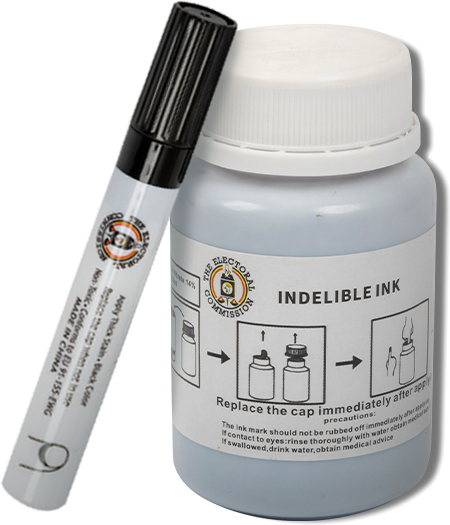
OBOOC has nearly 20 years of exclusive experience in supplying electoral ink.
As a professional supplier of electoral supplies, Aoboz electoral ink has won wide market trust for its high safety, strong durability and excellent anti-counterfeiting performance.
In terms of supply experience, the brand has been deeply engaged in the industry for more than 20 years with profound accumulated strength. It has provided customized ink solutions for major elections such as presidential and gubernatorial elections in more than 30 countries across Asia and Africa, boasting rich practical service experience.
In terms of product performance, its core advantages are particularly prominent: on the one hand, it adopts nano-silver particle technology, which greatly improves ink uniformity and skin adhesion. The mark is difficult to remove with ordinary cleaning agents, with stable color development and can last for 3 to 30 days. On the other hand, it is equipped with a quick-drying formula. After being applied to the skin or nails, it dries in just 10 to 20 seconds and turns clear dark brown after oxidation, which not only prevents smudging and blurring of the mark, but also effectively reduces the risk of cross-contamination.

Election ink, also known as indelible ink, is primarily composed of silver nitrate.
Post time: Apr-16-2026